⚠️ Research Use Only — This product is intended for in vitro research purposes only. Not for human consumption or clinical use. Consult a licensed physician for medical advice.
Retatrutide in Bali: Triple-Agonist Research Peptide
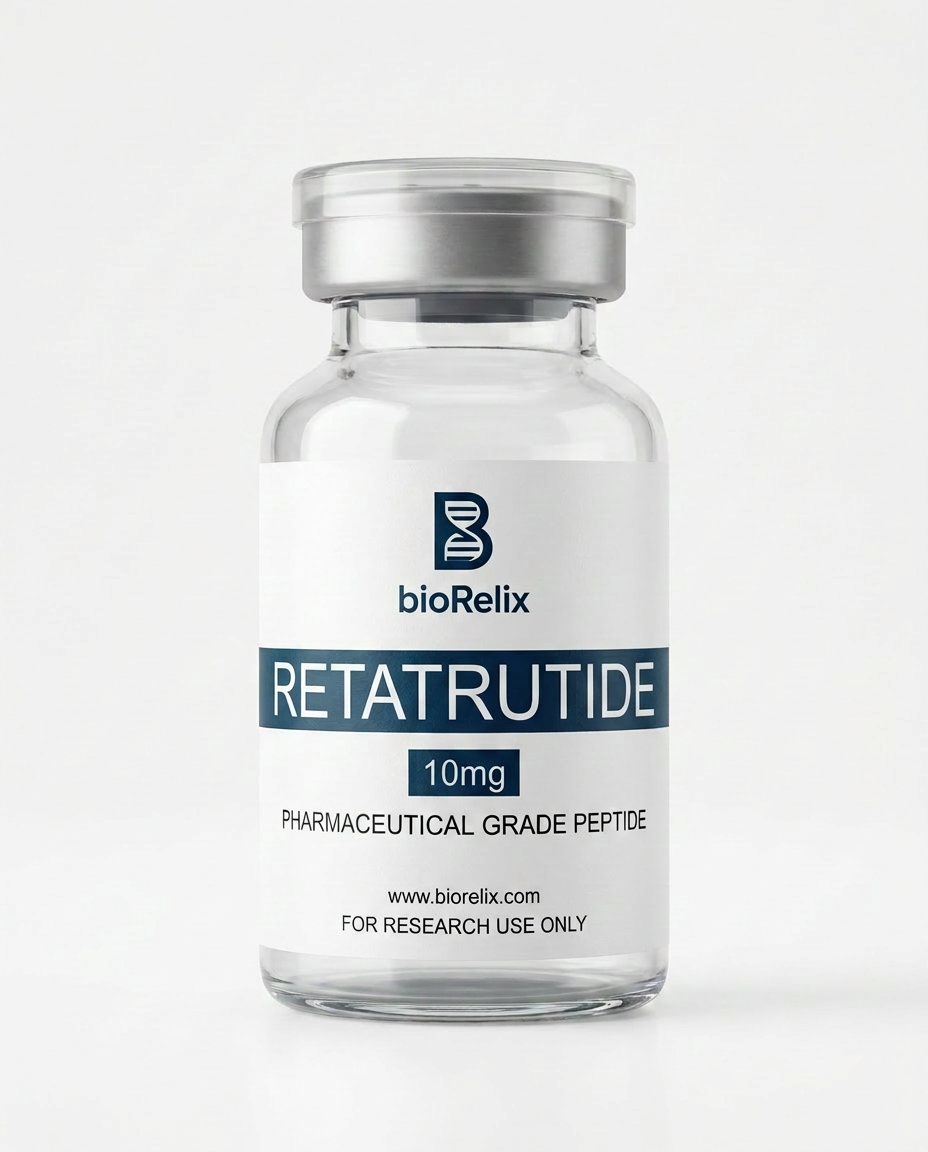
Retatrutide (LY3437943) is a novel triple-agonist peptide that activates GLP-1, GIP, and glucagon receptors simultaneously. Clinical trials have demonstrated unprecedented weight loss outcomes, making it a compound of significant research interest in metabolic science.
Research-Grade Retatrutide Available in Bali
Third-party HPLC tested (≥98% purity) • Same-day cold-chain delivery • Payment via USDT or COD
Buy Retatrutide in Bali →What is Retatrutide?
Retatrutide is a synthetic peptide developed by Eli Lilly as an investigational treatment for obesity and type 2 diabetes. Unlike earlier GLP-1 receptor agonists (semaglutide, liraglutide) or dual agonists (tirzepatide), retatrutide simultaneously activates three distinct metabolic pathways:
- GLP-1 receptor agonism → Enhances insulin secretion, suppresses glucagon, delays gastric emptying
- GIP receptor agonism → Amplifies insulin response, may improve fat metabolism and satiety
- Glucagon receptor agonism → Increases energy expenditure, promotes fat oxidation, reduces hepatic lipid accumulation
This triple-agonist mechanism represents a distinct approach from current GLP-1 monotherapies and GLP-1/GIP dual agonists.
Clinical Trial Data (Phase 2)
The landmark Phase 2 trial published by Jastreboff et al. (2023) in the New England Journal of Medicine evaluated retatrutide in 338 adults with obesity over 48 weeks:
| Dose | Mean Weight Loss | ≥5% Responders | ≥15% Responders |
|---|---|---|---|
| Placebo | -1.6% | 27% | 2% |
| 4 mg | -8.7% | 82% | 40% |
| 8 mg | -16.9% | 93% | 75% |
| 12 mg | -24.2% | 100% | 92% |
The 12 mg dose cohort achieved a mean weight reduction of 24.2% at 48 weeks—the highest ever reported in a clinical trial for any pharmacological obesity intervention. For context:
- Semaglutide (Wegovy 2.4 mg): ~15% weight loss at 68 weeks
- Tirzepatide (Zepbound 15 mg): ~22% weight loss at 72 weeks
- Retatrutide 12 mg: ~24% weight loss at 48 weeks
Mechanism: Why Three Receptors?
The addition of glucagon receptor agonism to the GLP-1/GIP framework is the key differentiator. While glucagon is traditionally associated with raising blood glucose, when combined with GLP-1 and GIP in retatrutide's engineered peptide sequence:
- Energy expenditure increases → Glucagon receptor activation in adipose tissue promotes thermogenesis and fat oxidation
- Hepatic fat clearance → Reduces steatosis without elevating blood glucose (GLP-1 counterbalances glucagon's glycemic effects)
- Enhanced lipolysis → Mobilizes stored fat more aggressively than GLP-1 alone
This synergistic effect explains why retatrutide outperforms dual agonists in preclinical models and early human trials.
Research Applications
Retatrutide is being investigated for:
- Obesity pharmacotherapy — Mechanisms of unprecedented weight loss via triple-agonism
- Metabolic syndrome — Effects on insulin sensitivity, lipid profiles, and hepatic steatosis
- Type 2 diabetes — Glycemic control beyond current incretin therapies
- NASH/NAFLD — Glucagon's role in hepatic fat metabolism
- Cardiovascular outcomes — Ongoing Phase 3 trials (TRIUMPH program) examining CV safety and benefits
Dosing Protocols (Research Context)
Clinical trials used a dose-escalation protocol to minimize gastrointestinal side effects:
- Weeks 1-4: 2 mg subcutaneous once weekly
- Weeks 5-8: 4 mg once weekly
- Weeks 9-12: 8 mg once weekly
- Week 13+: 12 mg once weekly (maintenance dose)
Gradual titration reduced discontinuation rates due to nausea, vomiting, and diarrhea (common with all GLP-1 agonists). Even at 12 mg, retatrutide's tolerability profile was comparable to lower-dose semaglutide.
Comparison: Retatrutide vs. Semaglutide vs. Tirzepatide
| Peptide | Mechanism | Weight Loss (Clinical) | Trial Duration |
|---|---|---|---|
| Semaglutide | GLP-1 agonist | ~15% | 68 weeks |
| Tirzepatide | GLP-1/GIP dual agonist | ~22% | 72 weeks |
| Retatrutide | GLP-1/GIP/glucagon triple agonist | ~24% | 48 weeks |
Retatrutide achieved greater weight loss in less time, suggesting accelerated fat loss via glucagon-mediated energy expenditure.
Side Effect Profile
Like all GLP-1 receptor agonists, retatrutide's most common adverse effects are gastrointestinal:
- Nausea (most common in escalation phase)
- Diarrhea
- Vomiting
- Constipation
In the Phase 2 trial, GI side effects were dose-dependent but manageable with gradual titration. Serious adverse events were rare (~1% across all doses).
Availability in Indonesia
Retatrutide is currently investigational and not approved by BPOM (Indonesia's drug regulatory authority) or the FDA. It is legal to purchase research-grade peptides in Indonesia for non-human, in vitro research purposes.
BioRelix supplies research-grade retatrutide synthesized by third-party laboratories with HPLC purity verification (≥98%). Our product is:
- Not manufactured by Eli Lilly
- Not a pharmaceutical-grade drug
- Not approved for clinical use in humans
- Intended solely for in vitro research
Storage and Reconstitution
Retatrutide is supplied as lyophilized powder and requires reconstitution with bacteriostatic water:
- Unreconstituted: Store at 2-8°C (refrigerator) or -20°C (freezer for long-term storage)
- Reconstituted: Store at 2-8°C, use within 28 days
- Avoid: Freezing after reconstitution, exposure to light, temperature fluctuations
For detailed reconstitution instructions, see our Peptide Reconstitution Guide.
Research Context: What's Next for Retatrutide?
Eli Lilly's Phase 3 TRIUMPH program is currently enrolling patients for cardiovascular outcomes and obesity treatment trials. If successful, retatrutide could receive FDA approval as early as 2026-2027. Until then, it remains an investigational compound available only for research purposes.
Order Research-Grade Retatrutide in Bali
5mg — Rp 1,900,000 | 10mg — Rp 2,800,000 | 30mg — Rp 7,500,000
- ✓ Third-party HPLC tested (≥98% purity)
- ✓ Same-day delivery (orders before 2 PM WITA)
- ✓ Cold-chain storage from lab to door
- ✓ Payment via USDT (TON/TRC-20) or cash on delivery
References
- Jastreboff AM, Kaplan LM, Frías JP, et al. Triple–Hormone-Receptor Agonist Retatrutide for Obesity — A Phase 2 Trial. N Engl J Med. 2023;389(6):514-526. doi:10.1056/NEJMoa2301972
- Thomas MK, Nikooienejad A, Bray R, et al. Dual GIP and GLP-1 receptor agonist tirzepatide improves beta-cell function and insulin sensitivity in type 2 diabetes. J Clin Endocrinol Metab. 2021;106(2):388-396.
- Müller TD, Finan B, Bloom SR, et al. Glucagon-like peptide 1 (GLP-1). Mol Metab. 2019;30:72-130.
- Brandt SJ, Götz A, Tschöp MH, Müller TD. Gut hormone polyagonists for the treatment of type 2 diabetes. Peptides. 2018;100:190-201.
⚠️ Reminder: This product is for research use only. Not for human consumption or clinical use. Always consult a licensed physician for medical advice regarding obesity, diabetes, or metabolic conditions.