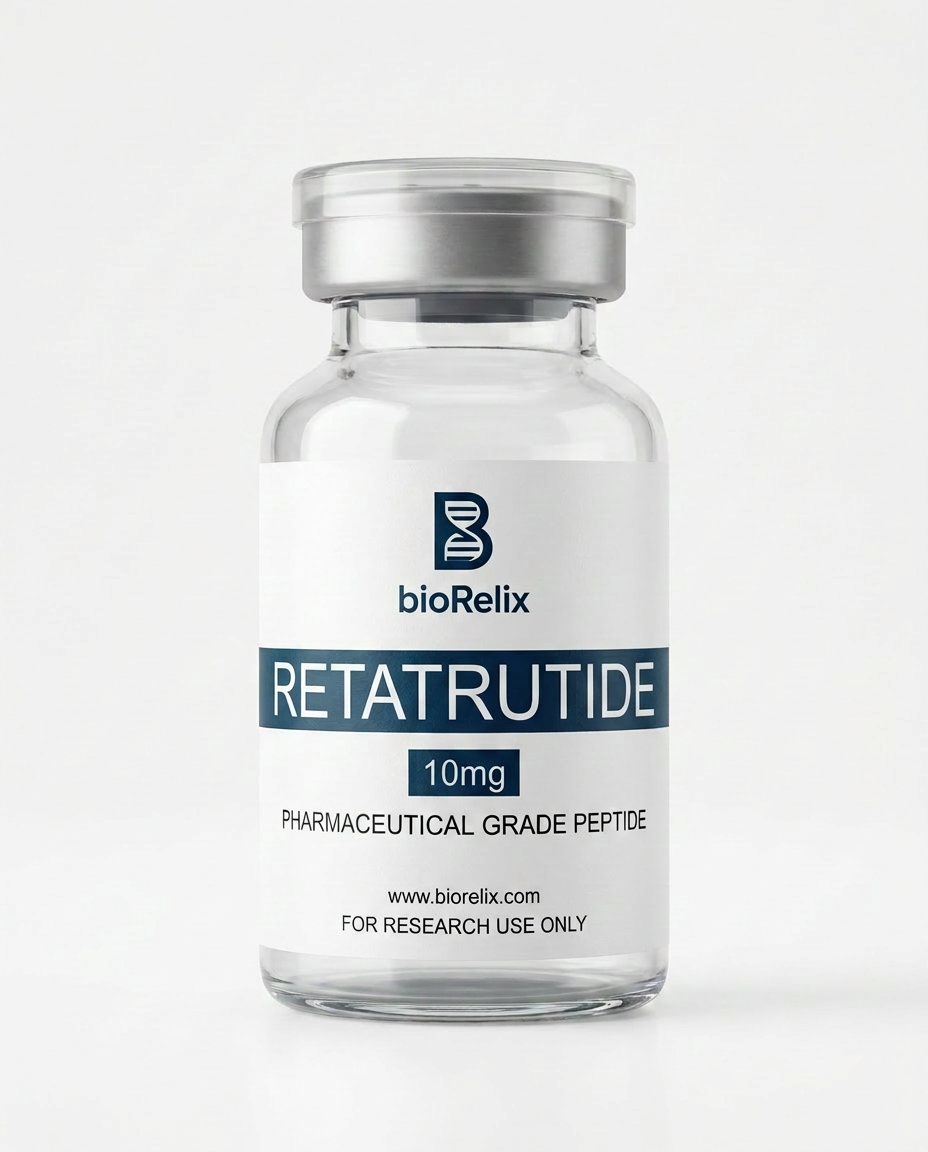
Retatrutide (LY3437943) is a triple GIP/GLP-1/glucagon receptor agonist currently in Phase 3 clinical trials. This guide provides evidence-based dosing protocols for personal research use, based on published clinical trial data.
Retatrutide represents the next generation of incretin-based peptides. Unlike semaglutide (GLP-1 agonist) or tirzepatide (dual GLP-1/GIP agonist), retatrutide activates three metabolic pathways simultaneously:
In the SURMOUNT-1 trial (Jastreboff et al., 2023), participants achieved an average of 24.2% body weight reduction at the 12mg dose over 48 weeks—significantly higher than tirzepatide (20.9%) or semaglutide (17.4%).
The SURMOUNT trials used a gradual dose escalation protocol to minimize gastrointestinal side effects:
| Weeks | Dose (mg/week) | Purpose |
|---|---|---|
| 1-4 | 0.5 mg | Adaptation phase |
| 5-8 | 1 mg | Low therapeutic dose |
| 9-12 | 2 mg | Moderate dose |
| 13-16 | 4 mg | Standard dose |
| 17-20 | 8 mg | High dose |
| 21+ | 12 mg | Maximum dose |
For individuals new to GLP-1 agonists, a conservative approach minimizes side effects while allowing metabolic adaptation:
| Week | Dose | What to Expect |
|---|---|---|
| 1-2 | 0.25 mg | Mild appetite suppression, possible nausea (10-15% of users) |
| 3-4 | 0.5 mg | Noticeable appetite reduction, 1-2% weight loss |
| 5-6 | 1 mg | Stronger satiety signals, 2-4% weight loss |
| 7-8 | 2 mg | Significant appetite suppression, 4-6% weight loss |
| 9-10 | 4 mg | Peak appetite control, 6-10% weight loss |
| 11-12 | 6-8 mg | Maintenance or continued progression |
Injection schedule: Once weekly, subcutaneous (abdomen, thigh, or upper arm). Same day each week (e.g., Monday evenings).
| Side Effect | Frequency | Management |
|---|---|---|
| Nausea | 30-40% | Eat smaller meals, avoid high-fat foods, ginger tea |
| Diarrhea | 15-20% | Increase fiber gradually, stay hydrated |
| Constipation | 10-15% | Magnesium citrate (200-400mg), psyllium husk |
| Injection site reactions | 5-10% | Rotate injection sites, allow peptide to reach room temp before injecting |
| Fatigue | 10-15% | Ensure adequate protein intake (1.6-2.2g/kg), electrolytes |
Increase dose by one step (e.g., 2mg → 4mg). Wait 4 weeks before increasing again.
Reduce dose by one step or stay at current dose for an additional 2-4 weeks before progressing.
Maintain current dose. Rapid loss can lead to muscle catabolism and gallstones.
Retatrutide is temperature-sensitive. In Bali's tropical climate:
For detailed storage protocols in humid climates, see our Tropical Climate Storage Guide.
BioRelix supplies retatrutide as lyophilized powder (10mg vials). To prepare for injection:
Full reconstitution tutorial: How to Reconstitute Peptides.
BioRelix supplies pharmaceutical-grade retatrutide in Bali with:
Order Retatrutide: 5mg (Rp 1,710,000) · 10mg (Rp 2,520,000) · 30mg (Rp 6,750,000) | Contact: WhatsApp +62 823-2132-1103